| @@ -1,80 +1,80 @@ |
| ### Statement |
| ### Statement |
| |
| |
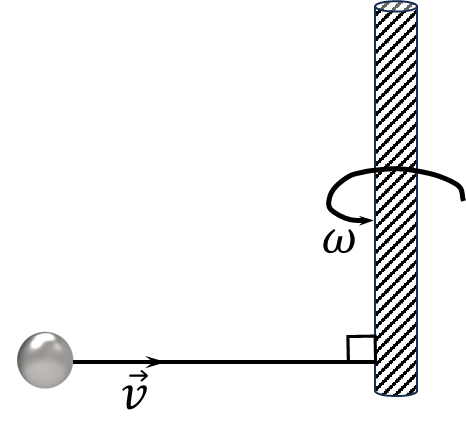
| \\\\\\\$2.7.41.\\\\\\\$ A thin rod of mass \\\\\\\$m\\\\\\\$ and length \\\\\\\$l\\\\\\\$ lies on a smooth horizontal surface. A plasticine ball of mass \\\\\\\$m\\\\\\\$ with a velocity \\\\\\\$v\\\\\\\$ perpendicular to the rod hits one of its ends and sticks to it. How much heat will be released from such an impact? |
| $2.7.41.$ A thin rod of mass $m$ and length $l$ lies on a smooth horizontal surface. A plasticine ball of mass $m$ with a velocity $v$ perpendicular to the rod hits one of its ends and sticks to it. How much heat will be released from such an impact? |
| |
| |
| ### Solution |
| ### Solution |
| |
| |
|  |
|  |
| |
| |
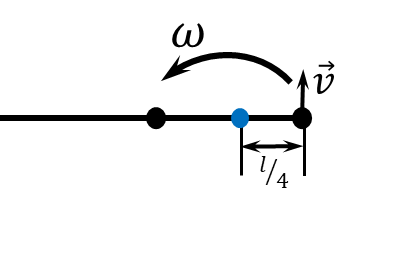
| After collision they will move as a unit, rotating around the centre of mass, which is at a distance \\\\\\\$l/4\\\\\\\$ from the contact point of the balls |
| After collision they will move as a unit, rotating around the centre of mass, which is at a distance $l/4$ from the contact point of the balls |
| |
| |
|  |
|  |
| |
| |
| Conservation of angular momentum |
| Conservation of angular momentum |
| |
| |
| \\\\\\\$\\\\\\\$ |
| $$ |
| mv\\\\\\\\cdot\\\\\\\\frac{L}{4}=m\\\\\\\\frac{\\\\\\\\omega L}{4}\\\\\\\\cdot\\\\\\\\frac{L}{4}+I\\\\\\\\omega\\\\\\\\tag{1} |
| mv\cdot\frac{L}{4}=m\frac{\omega L}{4}\cdot\frac{L}{4}+I\omega\tag{1} |
| \\\\\\\$\\\\\\\$ |
| $$ |
| |
| |
| Determening the moment of inertia, using parallel axis theorem |
| Determening the moment of inertia, using parallel axis theorem |
| |
| |
| \\\\\\\$\\\\\\\$ |
| $$ |
| I=\\\\\\\\frac{1}{2}mL^2+m\\\\\\\\left(\\\\\\\\frac{L}{4}\\\\\\\\right)^2=\\\\\\\\frac{7}{48}mL^2\\\\\\\\tag{2} |
| I=\frac{1}{2}mL^2+m\left(\frac{L}{4}\right)^2=\frac{7}{48}mL^2\tag{2} |
| \\\\\\\$\\\\\\\$ |
| $$ |
| |
| |
| From the \\\\\\\$(1)\\\\\\\$ and \\\\\\\$(2)\\\\\\\$ |
| From the $(1)$ and $(2)$ |
| |
| |
| \\\\\\\$\\\\\\\$ |
| $$ |
| v=\\\\\\\\frac{5}{6}\\\\\\\\omega L\\\\\\\\Rightarrow \\\\\\\\boxed{\\\\\\\\omega =\\\\\\\\frac{6v}{5L}} |
| v=\frac{5}{6}\omega L\Rightarrow \boxed{\omega =\frac{6v}{5L}} |
| \\\\\\\$\\\\\\\$ |
| $$ |
| |
| |
| Also, in addition to rotational motion, translational motion will be observed. From the law of conservation of momentum |
| Also, in addition to rotational motion, translational motion will be observed. From the law of conservation of momentum |
| |
| |
| \\\\\\\$\\\\\\\$ |
| $$ |
| mv=2mu\\\\\\\\Rightarrow u=v/2 |
| mv=2mu\Rightarrow u=v/2 |
| \\\\\\\$\\\\\\\$ |
| $$ |
| |
| |
| \\\\\\\$u\\\\\\\$ — centre of mass velocity |
| $u$ — centre of mass velocity |
| |
| |
| THe initial energy was as a kinetic energy |
| THe initial energy was as a kinetic energy |
| |
| |
| \\\\\\\$\\\\\\\$ |
| $$ |
| E_0=\\\\\\\\frac{mv^2}{2} |
| E_0=\frac{mv^2}{2} |
| \\\\\\\$\\\\\\\$ |
| $$ |
| |
| |
| The total energy after the collision: |
| The total energy after the collision: |
| |
| |
| \\\\\\\$\\\\\\\$ |
| $$ |
| E_f=\\\\\\\\frac{2mu^2}{2}+\\\\\\\\frac{I\\\\\\\\omega^2}{2}+\\\\\\\\frac{m(\\\\\\\\omega\\\\\\\\cdot L/u)^2}{2} |
| E_f=\frac{2mu^2}{2}+\frac{I\omega^2}{2}+\frac{m(\omega\cdot L/u)^2}{2} |
| \\\\\\\$\\\\\\\$ |
| $$ |
| |
| |
| Conservation of energy |
| Conservation of energy |
| |
| |
| \\\\\\\$\\\\\\\$ |
| $$ |
| E_0=E_f+Q |
| E_0=E_f+Q |
| \\\\\\\$\\\\\\\$ |
| $$ |
| |
| |
| Where, \\\\\\\$Q\\\\\\\$ — the released energy |
| Where, $Q$ — the released energy |
| |
| |
| \\\\\\\$\\\\\\\$ |
| $$ |
| Q=E_0-E_f |
| Q=E_0-E_f |
| \\\\\\\$\\\\\\\$ |
| $$ |
| |
| |
| \\\\\\\$\\\\\\\$ |
| $$ |
| Q=\\\\\\\\frac{mv^2}{2}-\\\\\\\\frac{mv^2}{2\\\\\\\\cdot2}-\\\\\\\\frac{7mL^2}{48}\\\\\\\\cdot \\\\\\\\left(\\\\\\\\frac{6v}{5L}\\\\\\\\right)^2\\\\\\\\cdot \\\\\\\\frac{1}{2}+\\\\\\\\frac{m\\\\\\\\cdot(6v/5L\\\\\\\\cdot L/4)^2}{2} |
| Q=\frac{mv^2}{2}-\frac{mv^2}{2\cdot2}-\frac{7mL^2}{48}\cdot \left(\frac{6v}{5L}\right)^2\cdot \frac{1}{2}+\frac{m\cdot(6v/5L\cdot L/4)^2}{2} |
| \\\\\\\$\\\\\\\$ |
| $$ |
| |
| |
| After the mathematical transformations |
| After the mathematical transformations |
| |
| |
| \\\\\\\$\\\\\\\$ |
| $$ |
| \\\\\\\\boxed{Q=\\\\\\\\frac{mv^2}{10}} |
| \boxed{Q=\frac{mv^2}{10}} |
| \\\\\\\$\\\\\\\$ |
| $$ |
| |
| |
| #### Answer |
| #### Answer |
| |
| |
| \\\\\\\$\\\\\\\$ |
| $$ |
| Q=1/10\\\\\\\\cdot mv^2 |
| Q=1/10\cdot mv^2 |
| \\\\\\\$\\\\\\\$ |
| $$ |
| |
| |
| |
| |
| |
| |
