| @@ -1,65 +1,59 @@ |
| ### Statement |
| ### Statement |
| |
| |
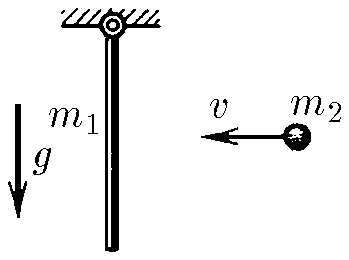
| \\\\\\\$2.7.42.\\\\\\\$ A rod of mass \\\\\\\$m_1\\\\\\\$ and length \\\\\\\$l\\\\\\\$ is suspended on a hinge. A small piece of plasticine of mass \\\\\\\$m_2\\\\\\\$ sticks to the middle of the rod, moving until it collides with it horizontally at a speed of \\\\\\\$V\\\\\\\$. Find the maximum angle of deviation of the rod from the vertical. Ignore the friction in the hinge. |
| $2.7.42.$ A rod of mass $m_1$ and length $l$ is suspended on a hinge. A small piece of plasticine of mass $m_2$ sticks to the middle of the rod, moving until it collides with it horizontally at a speed of $V$. Find the maximum angle of deviation of the rod from the vertical. Ignore the friction in the hinge. |
| |
| |
|  |
|  |
| |
| |
| ### Solution |
| ### Solution |
| |
| |
|  |
|  |
| |
| |
| Angular momentum |
| Angular momentum |
| |
| |
| \\\\\\\$\\\\\\\$ |
| $$ |
| \\\\\\\\left\\\\\\\\\\\\\\\\{\\\\\\\\begin{matrix} L=m_2v\\\\\\\\frac{l}{2} \\\\\\\\\\\\\\\\\\\\\\\\ L=I\\\\\\\\omega \\\\\\\\end{matrix}\\\\\\\\right. |
| \left\\{\begin{matrix} L=m_2v\frac{l}{2} \\\ L=I\omega \end{matrix}\right. |
| \\\\\\\$\\\\\\\$ |
| $$ |
| |
| |
| Parallel axis theorem |
| Parallel axis theorem |
| |
| |
| \\\\\\\$\\\\\\\$ |
| $$ |
| I=I_0+m_2d^2=\\\\\\\\frac{1}{3}m_1l^2+m_2\\\\\\\\left(\\\\\\\\frac{l}{2}\\\\\\\\right)^2 |
| I=I_0+m_2d^2=\frac{1}{3}m_1l^2+m_2\left(\frac{l}{2}\right)^2 |
| \\\\\\\$\\\\\\\$ |
| $$ |
| |
| |
| \\\\\\\$\\\\\\\$ |
| $$ |
| m_2v\\\\\\\\frac{l}{2}=\\\\\\\\omega\\\\\\\\left(\\\\\\\\frac{1}{3}m_1l^2+\\\\\\\\frac{1}{4}m_2l^2\\\\\\\\right) |
| m_2v\frac{l}{2}=\omega\left(\frac{1}{3}m_1l^2+\frac{1}{4}m_2l^2\right) |
| \\\\\\\$\\\\\\\$ |
| $$ |
| |
| |
| From where |
| From where |
| |
| |
| \\\\\\\$\\\\\\\$ |
| $$ |
| \\\\\\\\omega = \\\\\\\\frac{6m_2}{4m_1+3m_2}\\\\\\\\frac{v}{l} |
| \omega = \frac{6m_2}{4m_1+3m_2}\frac{v}{l} |
| \\\\\\\$\\\\\\\$ |
| $$ |
| |
| |
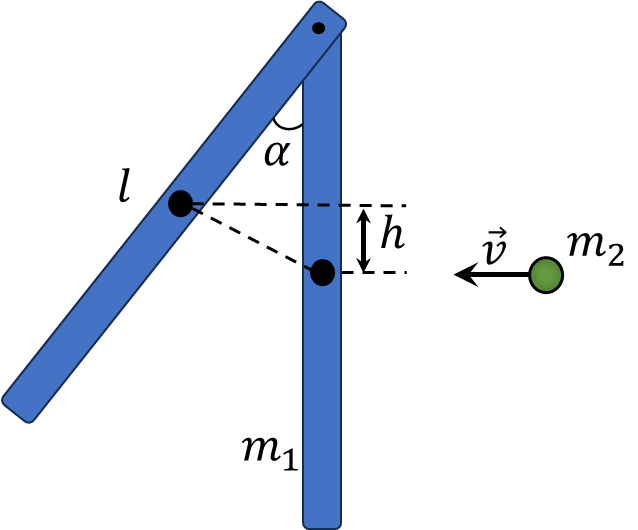
| From the figure |
| From the figure |
| |
| |
| \\\\\\\$\\\\\\\$ |
| $$ |
| h=\\\\\\\\frac{l}{2}(1-\\\\\\\\cos\\\\\\\\alpha ) |
| h=\frac{l}{2}(1-\cos\alpha ) |
| \\\\\\\$\\\\\\\$ |
| $$ |
| |
| |
| Law of conservation of energy in rotational motion |
| Law of conservation of energy in rotational motion |
| |
| |
| \\\\\\\$\\\\\\\$ |
| $$ |
| \\\\\\\\frac{I\\\\\\\\omega^2}{2}=(m_1+m_2)\\\\\\\\frac{l}{2}(1-\\\\\\\\cos\\\\\\\\alpha ) |
| \frac{I\omega^2}{2}=(m_1+m_2)\frac{l}{2}(1-\cos\alpha ) |
| \\\\\\\$\\\\\\\$ |
| $$ |
| |
| |
| Expressing \\\\\\\$\\\\\\\\cos\\\\\\\\alpha\\\\\\\$ |
| Expressing $\cos\alpha$ |
| |
| |
| \\\\\\\$\\\\\\\$ |
| $$ |
| 1-\\\\\\\\cos\\\\\\\\alpha =\\\\\\\\frac{I\\\\\\\\omega^2}{(m_1+m_2)l} |
| 1-\cos\alpha =\frac{I\omega^2}{(m_1+m_2)l} |
| \\\\\\\$\\\\\\\$ |
| $$ |
| |
| |
| \\\\\\\$\\\\\\\$ |
| $$ |
| \\\\\\\\boxed{\\\\\\\\cos\\\\\\\\alpha =1-\\\\\\\\frac{3m_2^2v^2}{gl(4m_1+3m_2)(m_1+m_2)}} |
| \boxed{\cos\alpha =1-\frac{3m_2^2v^2}{gl(4m_1+3m_2)(m_1+m_2)}} |
| \\\\\\\$\\\\\\\$ |
| $$ |
| |
| |
| #### Answer |
| #### Answer |
| |
| |
| \\\\\\\$\\\\\\\$ |
| $$ |
| \\\\\\\\cos\\\\\\\\alpha =1-\\\\\\\\frac{3m_2^2v^2}{gl(4m_1+3m_2)(m_1+m_2)} |
| \cos\alpha =1-\frac{3m_2^2v^2}{gl(4m_1+3m_2)(m_1+m_2)} |
| \\\\\\\$\\\\\\\$ |
| $$ |
| |
| |
| |
| |
| |
| |
| |
| |
| |
| |
| |
| |
