Statement
2.3.10. Why do bows that are strung too tightly or too loosely shoot poorly? How to choose the most suitable bow?
Solution
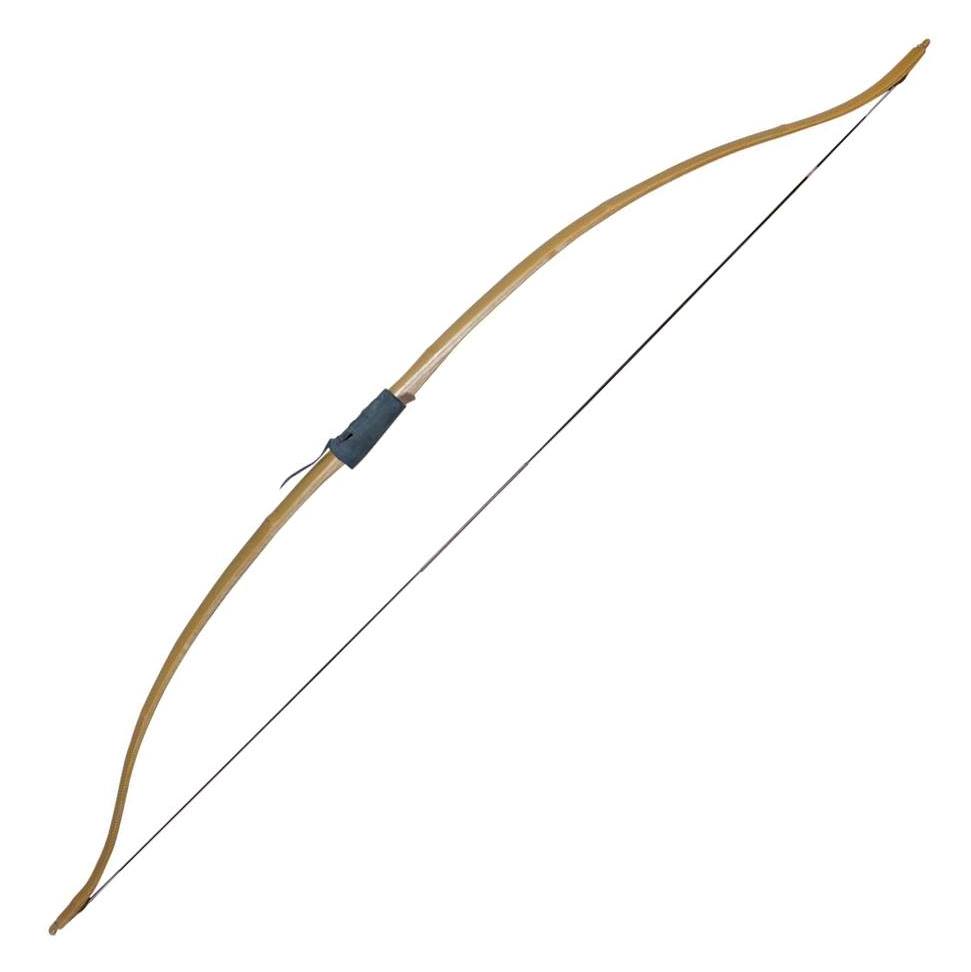
A bow shoots "well" when it imparts the maximum kinetic energy (and thus maximum velocity) to the arrow. The kinetic energy
where
where
- Bow strung too tightly (too stiff): The archer applies their maximum physical force
, but due to the high stiffness, they can only draw the bowstring a very short distance . The stored energy will be low because is small. - Bow strung too loosely (too weak): The archer can easily draw the bowstring to their maximum anatomical arm span
, but the force required to hold it is much less than their maximum capability. The stored energy will be low because is small.
How to choose the most suitable bow:
The most suitable bow is one whose stiffness