
Solutions of Savchenko Problems in Physics
    <h3 id="back-link"><a href="/#2.1">$\leftarrow$Back</a></h3>

    <h3> Statement </h3>
    <p>
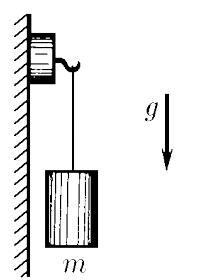
        $2.1.17.$ The body of mass $m$ is attached to two consecutive springs of stiffness $k_1$ and $k_2$. A constant force $F$ is applied to the free end of the spring chain. What is the total elongation of the springs, if the vibrations have already stopped?
    <h3>Solution</h3>
    <p>
        <center>
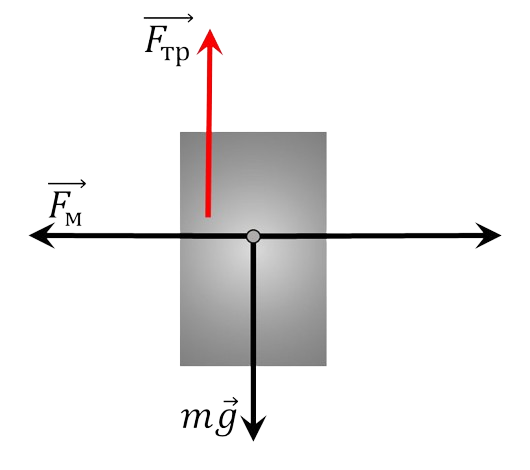
1. The body can be considered as free if the connections are replaced by their reactions. The friction force in this case is caused by the action of the magnetic force, i.e.
    <h4>Answer</h4>
    <p>
                 $$F = m_0g/\mu ;$$
     $$a = g(m − m_0)/m$$
    </p>


<footer class="row container">
  <br>
    <p>
        <small> © <strong>Savchenko Solutions</strong>, 2023-2024 <br></small>
    </p>
    <p>
        <small>All rights belong to the authors. <br> Commercial use of materials - with the written permission of the authors. <br> alex@savchenkosolutions.com <br></small>
    </p>
</footer>