Новое решение

en/13.4.11.md
+13 −0
| @@ -0,0 +1,13 @@ | |||
| + | ### Statement | ||
| + | |||
| + | $13.4.11.$ [Insert the problem statement] | ||
| + | |||
| + | ### Solution | ||
| + | |||
| + |  | ||
| + | |||
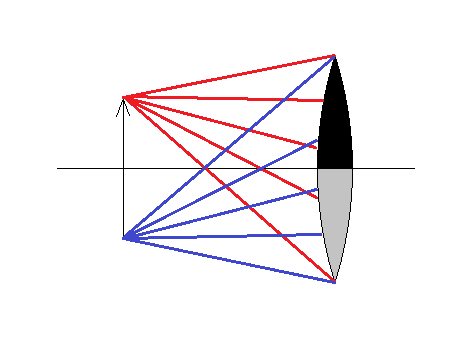
| + | An image of the entire object will be produced albeit with reduced intensity. The intensity of the image of the middle part of the object will be reduced by exactly a half. The upper part of the object is closer to the upper part of the lens (which is painted black) and the intensity of its image will be reduced by more than a half. On the other hand, the lower part of the object is farther from the upper part of the lens, and the intensity of its image will be reduced by less than a half. | ||
| + | |||
| + | #### Answer | ||
| + | |||
| + | [Insert a concise answer or boxed result] | ||
| @@ -0,0 +1,13 @@ | |||
| ### Statement | |||
| $13.4.11.$ [Insert the problem statement] | |||
| ### Solution | |||
|  | |||
| An image of the entire object will be produced albeit with reduced intensity. The intensity of the image of the middle part of the object will be reduced by exactly a half. The upper part of the object is closer to the upper part of the lens (which is painted black) and the intensity of its image will be reduced by more than a half. On the other hand, the lower part of the object is farther from the upper part of the lens, and the intensity of its image will be reduced by less than a half. | |||
| #### Answer | |||
| [Insert a concise answer or boxed result] | |||