Statement
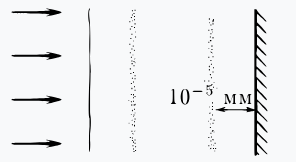
12.1.20. A layer of photoemulsion is applied on a mirror metal substrate. When light falls normally at a distance of
Solution
Light incident normally on the metallic mirror reflects and interferes with the incident light, generating a standing electromagnetic wave. As shown in the previous problems, the electric field vanishes at the surface of an ideal metal—a node of the electric field (
The antinodes (maxima of electric field intensity) are located at distances of
Wavelength:
The first darkening (first antinode) occurs at a distance
(For reference: this is
Distance to the second layer:
The second layer of blackened emulsion forms at the location of the second antinode of the standing wave. The distance from the metal surface to the second antinode is:
Answer
The effect is due to the formation of a standing wave and the location of the electric field antinodes.