Правка раздела «Solution»

en/13.1.13.md
+1 −1
| ### Statement | |||
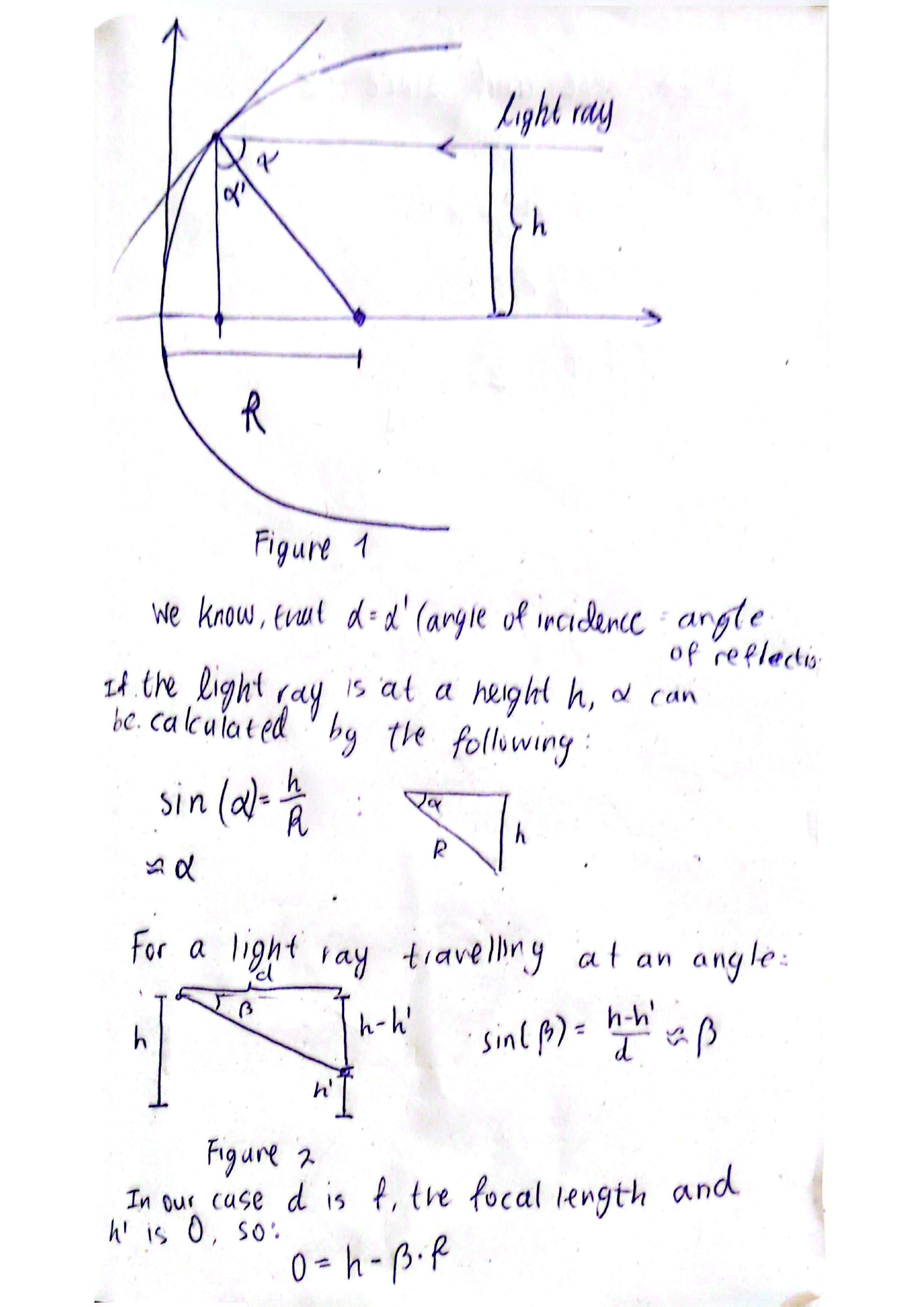
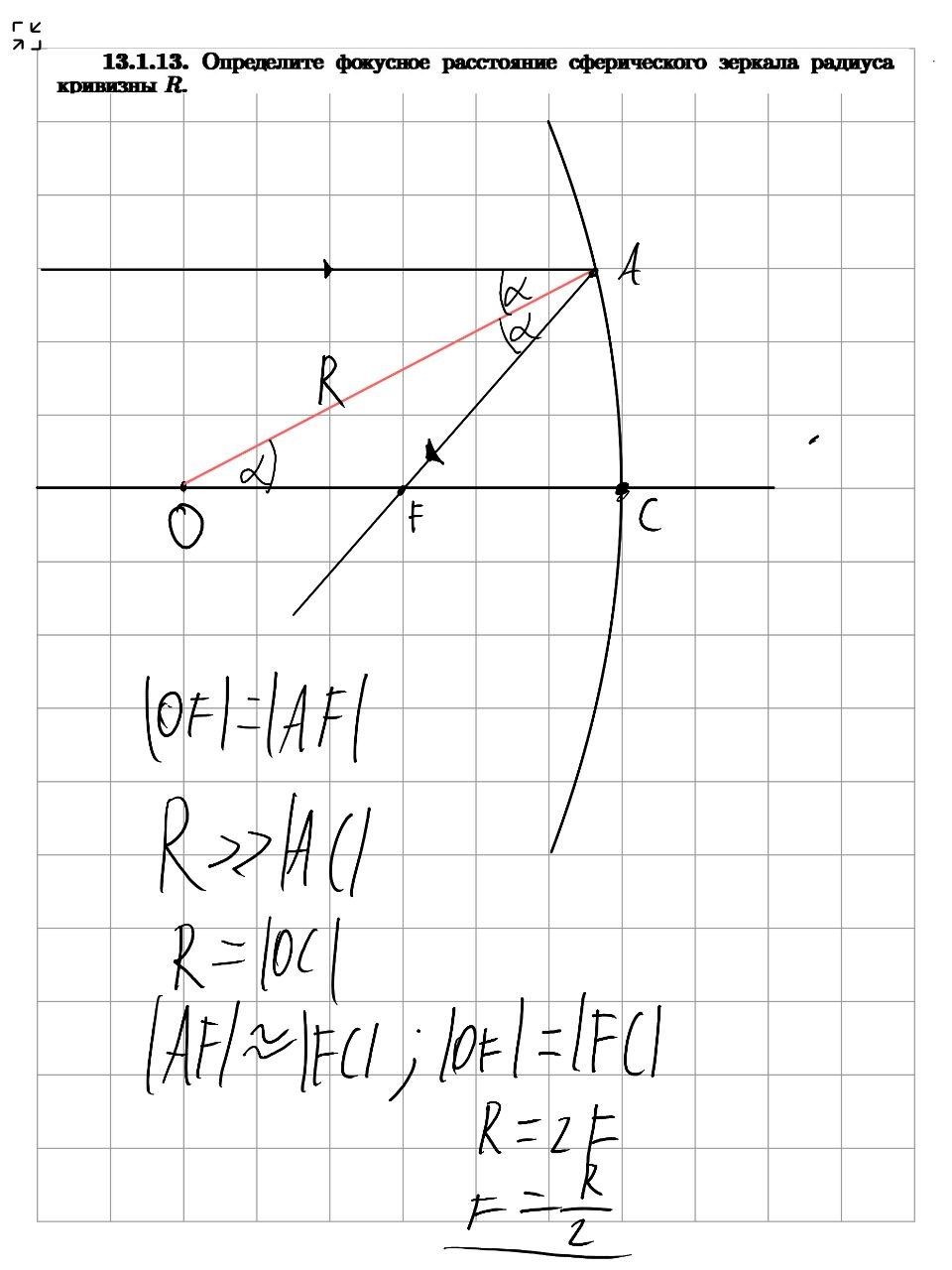
| $13.1.13.$ Determine the focal length of a spherical mirror of radius of curvature R. | |||
| ### Solution | |||
|  | |||
| @@ -8,8 +8,8 @@Solution | |||
|  | |||
| − | Here it was used that h' = 0, no matter what the original h value is. Since the incident height does not change where the ray converges. | ||
| + | Here it was used that h' = 0, no matter what the original h value is. Since the incident height does not change where the ray converges. I would also like to note, that I made a small error, For a light ray travelling at an angle, I wrote sin(β), it is supposed to be tan(β), but we can still use the small angle approximation. So it doesn't change the result. | ||
| #### Answer | |||
| [R/2] | |||
| ### Statement | ### Statement | ||
| $13.1.13.$ Determine the focal length of a spherical mirror of radius of curvature R. | $13.1.13.$ Determine the focal length of a spherical mirror of radius of curvature R. | ||
| ### Solution | ### Solution | ||
|  |  | ||
| @@ -8,8 +8,8 @@Solution | |||
|  |  | ||
| Here it was used that h' = 0, no matter what the original h value is. Since the incident height does not change where the ray converges. | Here it was used that h' = 0, no matter what the original h value is. Since the incident height does not change where the ray converges. I would also like to note, that I made a small error, For a light ray travelling at an angle, I wrote sin(β), it is supposed to be tan(β), but we can still use the small angle approximation. So it doesn't change the result. | ||
| #### Answer | #### Answer | ||
| [R/2] | [R/2] | ||